Tag: OSRS Gold

Some Classic Runescape Quests Won’t Make It Into Old School RuneScape

Old School RuneScape (OSRS) has long been celebrated for its nostalgic feel, bringing back the charm of the game as it was in 2007 while also providing players with new content through careful updates. For many OSRS players, part of the appeal lies in the preservation of the “classic” experience that players of the original RuneScape enjoyed. The development team, Jagex, has been meticulous about what updates and content are included in OSRS, ensuring that it remains true to its roots while still evolving in a way that feels organic to the original game.

However, one aspect of OSRS that has raised questions among players is the selection of quests that are, or rather are not, included in the game. While many quests from RuneScape’s earlier years have made their way into OSRS gold, there are certain iconic quests from the classic era that, for various reasons, will not be making an appearance in the Old School version. This article delves into the reasons why some classic RuneScape quests will never be included in OSRS and explores the broader implications of these decisions.

The Philosophy Behind OSRS

Before examining the specific quests that won’t make it into OSRS, it’s important to understand the philosophy behind OSRS as a game. OSRS was created as a “time capsule” version of RuneScape, designed to preserve the state of the game as it existed back in 2007. It’s a game that caters to players who want to relive their memories of the past while still receiving updates and additions that feel true to the original.

This preservationist mentality means that OSRS, while receiving updates, does not always follow the same development trajectory as RuneScape 3 (RS3). It is intended to stay as faithful as possible to the 2007 version of the game, which means that certain developments, including quests, must be carefully considered before being added to the game. If a particular quest or story arc diverges too far from the essence of the 2007-era game, it risks breaking the immersion and nostalgic value that OSRS holds for its fanbase.

The Role of Community Involvement in OSRS Development

Unlike RuneScape 3, OSRS is largely driven by player feedback. This is an essential aspect of how the game evolves, and the community’s influence is perhaps most prominent when it comes to deciding which content is added to the game. Through polls and community input, players have the opportunity to vote on whether or not specific content should be added to the game.

If a quest is to be added to OSRS, it typically undergoes a community poll where players vote on whether they would like to see it in the game. While the idea of including old content from RuneScape is often popular, some classic quests don’t make it through these community polls due to concerns about lore, difficulty, or simply the desire to avoid breaking the integrity of the game’s original setting.

Why Some Classic Quests Won’t Be Added to OSRS

Several factors contribute to why certain classic quests from RuneScape’s history won’t be appearing in OSRS. These factors involve issues such as lore continuity, thematic incompatibility, and development challenges. Below are a few of the reasons why some quests from the original game will never be part of OSRS.

1. Lore and Worldbuilding Incompatibility

One of the most significant reasons for excluding certain quests from OSRS is the issue of lore and world-building. As OSRS continues to develop, it needs to ensure that new content fits within the established world of Gielinor, and sometimes this creates a conflict when trying to add quests from RuneScape’s later years.

Take the “Elven” quests, such as “The Fate of the Gods,” which were released in RuneScape 3. These quests revolve around the highly intricate lore surrounding the Elves, their gods, and their complex relationships with other factions. The storylines in these quests are steeped in the events of the God Wars and the wider political landscape of the world, all of which are deeply tied to developments in the post-2007 lore of RuneScape.

In OSRS, the focus is firmly placed on the events leading up to 2007 and largely avoids incorporating content that might contradict the world that existed at that time. The inclusion of some of these later quests would disrupt the established lore, especially when it comes to the complex relationships between gods, factions, and other races that weren’t part of the original world-building in 2007.

2. Technical Limitations

Some of the classic quests that are excluded from OSRS are simply too advanced in terms of their technical demands. RuneScape has gone through significant graphical and engine changes over the years, and as a result, many quests in RuneScape 3 rely on mechanics that OSRS either doesn’t have or would require substantial changes to the game to support.

For example, quests in RuneScape 3 often feature intricate cutscenes, highly detailed animations, and voice acting, which make use of the more powerful game engine. OSRS, on the other hand, uses the older 2007-era graphics and mechanics, which do not support these features. While some quests in OSRS do make use of more modern mechanics, they are typically designed within the limitations of the game’s original engine.

A quest like “The Blood Runs Deep,” which was released in RuneScape 3, involves a high level of interaction with the environment, animated cutscenes, and other modern features. Recreating this quest in the context of OSRS would require considerable changes to the game’s engine, potentially changing the feel of the game altogether.

3. Nostalgia vs. New Content

Many quests in RuneScape 3 were designed with the evolving nature of the game in mind, and their stories often represent major turning points in the RuneScape universe. These quests could involve the introduction of new characters, regions, and gods that were added to the game after 2007. OSRS, however, is designed to preserve the world of RuneScape as it was in 2007, and this means that the development team must be careful not to introduce anything that would fundamentally alter the world.

For example, quests like “The Needle Skips,” which explore the more recent additions to the world such as the factions of modern-day RuneScape, would clash with the more “static” version of Gielinor in OSRS. Adding such quests would break the nostalgic feel and disrupt the overall continuity of the game as it existed back in 2007.

4. Community Polling and Consensus

In some cases, classic quests are excluded from OSRS simply because the community doesn’t support their inclusion. As mentioned earlier, OSRS content is largely driven by community input, and if a quest is seen as too complex or outside the scope of what players want in the game, it will not be added.

For instance, “The Death of Chivalry”, a quest from RuneScape 3, features an extremely complex storyline with political intrigue and heavy involvement of high-level factions in the game. It’s a quest that appeals to a certain demographic of players who enjoy intricate plots, but many players in the OSRS community have expressed concerns about such content potentially disrupting the game’s core identity. Given that OSRS prioritizes accessibility and simpler narratives, such content might not pass the player polls.

5. Focus on Combat and Skills Rather than Storytelling

Some classic quests from RuneScape 3 simply don’t fit the OSRS mold because they are too focused on complex narratives and puzzle mechanics that don’t resonate with OSRS’s more combat and skill-based focus. OSRS players generally prefer quests that are relatively straightforward in terms of their objectives and rewards. More complex and story-driven quests that rely heavily on intricate dialogue or puzzle-solving tend to be less popular with the OSRS community.

Conclusion

While OSRS remains a nostalgic journey into the past for many players, its commitment to preserving the 2007-era experience means that not every classic RuneScape quest will make the cut. Whether due to lore conflicts, technical limitations, or the community’s preference for a simpler, more combat-oriented game, certain quests from RuneScape’s history will remain part of the past.

The future of OSRS will likely continue to balance the introduction of new content with the need to maintain the integrity of the original game. This careful curation of quests and updates ensures that OSRS remains the beloved version of RuneScape that players know and cherish, while also evolving in a way that respects its history. As new quests are added and others are left out, players can be confident that the spirit of buy RuneScape gold will remain intact, even if some of its most complex and grandiose storylines don’t make it into the game.
Old School RuneScape: 10 Best Cape Perks

In Old School RuneScape (OSRS), capes are more than just cosmetic items; they come with unique perks and advantages that can significantly enhance gameplay. Whether you’re looking for combat boosts, efficient skilling, or unique abilities, the right cape can provide a notable advantage in your journey through Gielinor. This article explores the 10 best cape perks in OSRS, highlighting their benefits and how they can improve various aspects of the game.

1. Fire Cape – Ultimate Combat Survivability

Perk: +4 to all Defence stats, boost for TzTok-Jad fight, and iconic combat cape.

The Fire Cape is arguably the most iconic cape in OSRS gold, obtained by completing the Fight Cave and defeating TzTok-Jad. This cape provides a +4 bonus to all Defence stats, making it an excellent choice for any combat situation where you need extra protection. Whether you’re PvM’ing or engaging in player-versus-player (PvP) content, the Fire Cape increases your overall survivability.

Additionally, the Fire Cape serves as a badge of honor for players who have mastered the Fight Cave, a difficult minigame where you must face numerous waves of enemies before fighting TzTok-Jad, one of the most challenging bosses in OSRS. This cape is an essential item for those wishing to prove their combat skills and conquer high-level bosses.

2. Ava’s Device (Ava’s Attractor/Accumulator) – Perfect for Ranged Training

Perk: Collects ammunition, boosts Ranged attack, and provides Defence bonuses.

Ava’s Device is an incredible perk for players focusing on Ranged combat, and it comes in two forms: Ava’s Attractor and Ava’s Accumulator. Both capes are rewards from the Animal Magnetism quest. Ava’s Device automatically collects arrows, bolts, and thrown items, which can be a game-changer for Ranged training. No longer will you have to worry about running out of ammunition during training or PvM encounters.

Ranged Attack Bonus: Ava’s Device provides +2 to Ranged attack.

Defence Bonus: The device also offers a +4 bonus to Defence, which improves your tanking capabilities in combat.

Efficiency: The Ava’s Accumulator variant provides the highest Ranged attack bonus of any item in the game, making it a must-have for Ranged-focused players.

The Ava’s Device is a perfect fit for players who are actively training Ranged or engaging in combat that requires a steady supply of ammunition.

3. Ardougne Cloak – Skilling and Teleport Perks

Perk: Teleports to Ardougne, boosts Thieving and Agility, and provides several skilling advantages.

The Ardougne Cloak is an essential item for skilling, especially for players focused on Agility and Thieving. This cape is a reward for completing the Ardougne Diary, a set of tasks that require players to complete challenges in and around the Ardougne region.

Teleport to Ardougne: One of the primary perks of this cloak is the ability to teleport directly to Ardougne, an area filled with quests, shops, and training opportunities.

Thieving Bonus: The Ardougne Cloak provides a +1 bonus to Thieving, which helps when training Thieving or engaging in safecracking.

Agility Bonus: The cloak also provides a +4 bonus to Agility, making it helpful for players engaged in Agility courses.

Other Perks: The Ardougne Cloak offers several bonuses, including reducing the number of bones required for Prayer training and allowing faster access to Ardougne teleport.

Overall, the Ardougne Cloak is an excellent choice for players who frequently engage in skilling or need quick access to Ardougne.

4. Graceful Cape – Boosting Agility Training Efficiency

Perk: Reduces weight, boosts run energy recovery, and increases Agility training speed.

The Graceful Cape is one of the best capes for training Agility. It reduces your total weight by 2.5 kg, which significantly increases your run energy recovery. This perk is incredibly useful when training Agility, as it allows you to run longer distances and recover energy faster.

Weight Reduction: The Graceful Cape contributes to the weight-reducing set bonus when worn with other Graceful items (such as the Graceful Hood, Graceful Top, and others). Together, the Graceful set reduces your weight by up to 30%, allowing you to train Agility more efficiently.

Improved Efficiency: With the cape, you can train on courses like the Rooftop Courses without constantly running out of energy, making your Agility training much faster.

The Graceful Cape is indispensable for anyone seeking to maximize their Agility experience and reduce downtime between laps on various courses.

5. Skillcape of the Reaper – Slayer-Related Perk

Perk: Unlocks the Reaper activity, which rewards Slayer XP and loot.

The Skillcape of the Reaper is a unique cape that can be obtained by completing Slayer tasks for Duradel. This cape unlocks the Reaper activity, an extra challenge within OSRS that allows you to Slay various bosses in exchange for Slayer XP, loot, and the satisfaction of defeating powerful foes.

While it doesn’t offer significant combat bonuses compared to other capes, the Skillcape of the Reaper is invaluable for those interested in Slayer and bossing. It’s a great addition to the Slayer experience, enabling you to complete high-level tasks while gaining XP and additional rewards.

6. Imbued God Cape – Boost for PvM Combat

Perk: Boosts combat stats and offers more attack power for God Wars Dungeon.

The Imbued God Cape is an upgraded version of the standard God Cape, offering a boost to combat stats and significantly increasing your damage output in God Wars Dungeon. This cape is useful for PvM enthusiasts who engage in bossing and other combat-related activities.

Combat Boosts: The Imbued God Cape provides a variety of combat bonuses, making it an excellent option for high-level bosses like those found in the God Wars Dungeon.

Increased Attack: This cape increases your attacks against God Wars Dungeon bosses, improving your damage and making boss kills faster and more efficient.

The Imbued God Cape is a must-have for players who enjoy PvM content and are preparing to tackle some of OSRS’s most challenging bosses.

7. Completionist Cape – Ultimate Cape for Maxed Players

Perk: Provides the highest bonuses and perks for maxed players.

The Completionist Cape is the ultimate cape in OSRS, available to players who have achieved all 99 stats, completed all quests, and gathered all achievements. This cape offers the highest bonuses and provides a wide array of perks that make it the most powerful cape in the game.

All-around Boosts: The Completionist Cape provides significant boosts to combat stats, skilling abilities, and teleports, allowing players to enjoy unmatched convenience and power.

Access to Special Areas: This cape allows players to enter special areas and receive additional bonuses that make the Completionist Cape one of the most coveted items in OSRS.

This cape is reserved for the most dedicated players, but the perks it offers make it the ultimate status symbol and gameplay tool in OSRS.

8. Veteran Cape – Reward for Long-Term Commitment

Perk: Symbolizes time spent in the game with added bonuses.

The Veteran Cape is a unique cape for long-time OSRS players, awarded to players who have been active for multiple years. While the cape itself does not offer game-breaking perks, it provides a sense of prestige and an experience boost for veteran players.

9. Godsword Cape – Perfect for PvP Combat

Perk: Grants bonus stats and boosts PvP combat skills.

The Godsword Cape is an excellent cape for PvP players, as it provides a combat bonus that increases damage and improves attack. Whether you’re engaging in PKing or training, this cape gives you a tactical advantage over opponents.

10. Karamja Gloves – Skilling and Combat Advantage

Perk: Boosts combat stats and skilling efficiency in Karamja.

Karamja Gloves offer several bonuses, especially for players training combat and engaging in skilling in the Karamja area.

Conclusion

RuneScape gold for sale offers a variety of capes with amazing perks, and choosing the right cape for your playstyle can significantly improve your overall gameplay experience. Whether you’re focused on combat, skilling, or PvM, the Fire Cape, Graceful Cape, Ava’s Device, and Ardougne Cloak are some of the best options to consider.

By acquiring the best cape perks, you can elevate your OSRS journey, whether it’s through increased combat efficiency, quicker skilling, or more convenience for various activities across the game. Choose wisely based on your needs, and unlock the full potential of your time in Gielinor.

Guide to OSRS Beneath Cursed Sands Quest

Embark on an exciting adventure in the city of Sophanem and its surrounding areas with the OSRS Beneath Cursed Sands quest. This OSRS guide will provide you with step-by-step instructions to help you complete the quest and earn valuable rewards.

Starting the Quest:
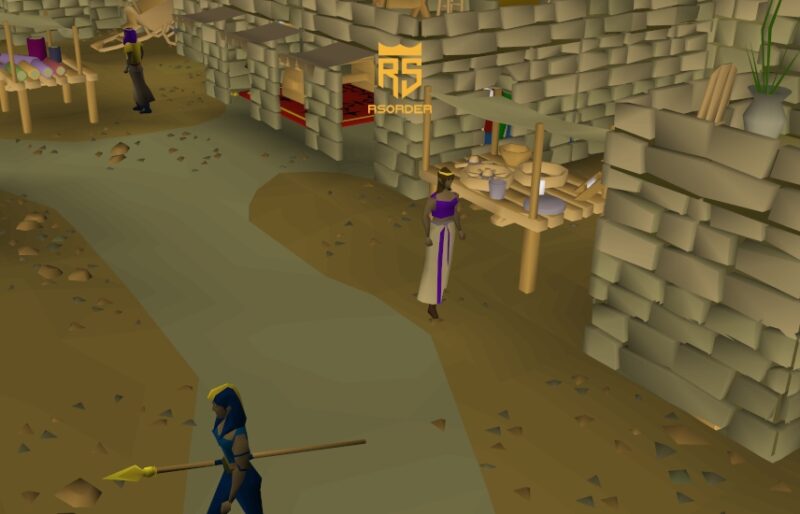
To initiate the Beneath Cursed Sands quest, make your way to Sophanem. Begin by taking the Shantay Pass to Polivneach. From Polivneach, board the southern carpet route that leads to Sophanem.

Meeting Jamila:
Upon arriving in Sophanem, locate Jamila. She will inform you about the people of Menaphos breaking the quarantine and excavating the Necropolis. Agree to assist her, and she will introduce you to Maisa, a spy from Al-Kharid, who possesses crucial information regarding the situation.

Obtaining the Scarab Mould:
Leave Sophanem and travel east towards the ruins of Ullek. Explore the ruins until you discover a concealed chest. Inside the chest, you will find a Scarab Mould. Remember to take the mould with you as it is necessary for gaining access to the tomb.

Creating the Iron Scarab Emblem:
Utilize the Scarab Mould to craft an Iron Scarab Emblem. This emblem will serve as your key to enter the tomb and progress through the quest.

Exploring the Tomb:
With the Iron Scarab Emblem in your possession, enter the tomb. Inside, you will encounter Scarab Mages and face various challenges. Pay close attention to the provided clues and employ your problem-solving skills to overcome obstacles and advance further.

Preparing for Combat:
While navigating the tomb, be prepared for combat encounters. Equip yourself with suitable gear and bring an ample supply of food and potions to sustain yourself during battles.

Reaching the Temple of the Eye:
Continue exploring the tomb, solving puzzles, and defeating enemies until you reach the end. Here, you will discover the Temple of the Eye. Interact with the NPCs inside the temple to gather any necessary information and progress the quest.

Reporting to the Mysterious Stranger:
After completing all the challenges within the tomb and obtaining the required information, it’s time to report your progress to the Mysterious Stranger. This marks the completion of the Beneath Cursed Sands quest.

Rewards:
Upon completing the Beneath Cursed Sands quest, you will receive quest points and antique lamps as rewards. These antique lamps can be used to gain combat skill experience, enabling further development of your character.

Congratulations! You have successfully finished the OSRS Beneath Cursed Sands quest. Enjoy your rewards and the sense of accomplishment that comes with conquering this challenging quest. If you want to complete other more difficult quests, RSorder‘s OSRS Gold will help you.