Beyond the Haste: Rethinking the Validity of 5-Match Player Reviews in EA FC 24

In the dynamic realm of EA FC 24, a pertinent concern echoes within the community—an appeal to reconsider the prevalent trend of relying on 5-match player reviews. The argument gains traction, drawing attention to the limitations imposed by this brief window of assessment, particularly when scrutinizing players of considerable stature like Gullit. The call for a more comprehensive understanding extends to recognizing the inherent challenges posed by drawing conclusions from a mere 5 games, as exemplified by the five-match loan stint with Eusebio, where initial perceptions may fall short of the player’s true potential.

The Gullit Dilemma
Gullit stands as a prime case study, emblematic of the overarching issue. The community finds itself immersed in a sea of opinions shaped by a limited exposure—a mere 5-match loan. The crux of the matter lies in the inherent inadequacy of this sample size to capture the nuances and intricacies that define a player’s performance, especially when tasked with the versatile role of a box-to-box midfielder.

Eusebio’s Enigma
The case of Eusebio further underscores the limitations of a 5-game assessment. A superficial glance at a 5-match loan tenure might lead one to conclude that Eusebio falls short of expectations, with no goals and a solitary assist. However, this snapshot fails to capture the broader context—a flawless 5-0 record in Champions League matches. The incongruity between the statistics and the actual impact on the team points to the inherent fallacy of relying solely on a limited set of games.

The Fallacy of a 5-Game Assessment
The heart of the matter lies in acknowledging the fallacy of drawing definitive conclusions from such a minuscule sample size. While 5 games provide a glimpse into a player’s attributes, they often fall short of revealing the full spectrum of animations, runs, and statistical performance. Players, especially those of the caliber of Gullit and Eusebio, necessitate a more extensive evaluation period to unveil the intricacies that define their gameplay.

The Need for Extended Evaluation
A resonating sentiment within the community advocates for a paradigm shift—a departure from the inclination to formulate judgments based on a mere handful of matches. The call is for a more patient and thorough evaluation process, one that extends beyond the constraints of a 5-game loan.

Gaining Familiarity
Understanding a player’s animations, runs, and idiosyncrasies requires a more extended period of interaction. A minimum of 20 games emerges as a suggested benchmark, allowing players to familiarize themselves with the nuances that contribute to a player’s unique style.

Rethinking the Review Culture
As the community engages in this discourse, the call to reevaluate the prevailing review culture gains momentum. Beyond the allure of immediacy, the focus shifts toward a more measured and insightful exploration of player performance, fostering a culture where judgments are reserved until a player’s attributes have been scrutinized through a more extended lens.

Conclusion
In conclusion, the plea to abandon the 5-match player review culture resonates with the community’s collective desire for a more nuanced understanding of player dynamics. Gullit’s case serves as a catalyst for this discourse, prompting a reassessment of the temporal benchmarks set for player evaluations. As EA FC 24 continues to evolve, the community advocates for a shift toward comprehensive, extended assessments that mirror the intricate nature of virtual football, allowing players like Gullit and Eusebio to shine in a more holistic light.

I want to get Gullit, so I buy a lot of FC 24 Coins from MMOexp.com, open the packs, Wish me luck.

Throne and Liberty: A Guide to Builds and Weapons

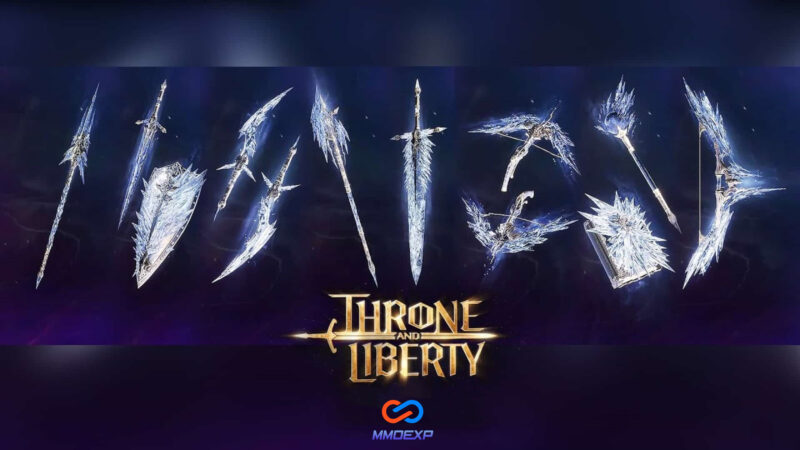
Throne and Liberty, a game that has been gaining popularity, demands strategic prowess, and a keen understanding of character builds and weapons. In this guide, we’ll delve into the three primary categories: Tanks, DPS, and Support. Whether you’re a seasoned player looking for optimization or a newcomer seeking the best path, this guide is crafted to provide the most straightforward and valuable information.

Tanks: Sword and Shield Dominance

When it comes to tanks, the Sword and Shield emerge as the undisputed champions. While some argue for the Great Sword, the Sword and Shield combo takes the lead for its exceptional survivability, crowd control (CC), and reflective capabilities. Here are some recommended builds:

Sword and Shield + Great Sword Build:

    This build dominates the front lines with formidable CC, survivability, and reflective abilities.
    Recommended for both PvE and PvP.
    Level up Valiant Brawl early for effective damage in PvE.

Sword and Shield + Wand and Tome Build:

    Ideal for those aspiring to play the Holy Paladin role.
    Leverages sleep and spread for strategic advantages in small-scale skirmishes.
    Allows for putting multiple opponents to sleep, providing a numerical advantage.

Evasion-focused Sword and Shield Build:

    An intriguing build that centers around evasion.
    Provides a thrilling experience for those seeking a unique playstyle.
    Offers hints of evasion mechanics without diving into specific details.

DPS: Unleashing the Great Sword and Dagger Menace

For those who revel in dealing with damage, the DPS category presents exciting opportunities. Two standout builds are the Great Sword and Dagger combo:

Great Sword + Dagger Build:

    A crit-focused build with exceptional CC capabilities.
    Offers high crit damage for a devastating impact on enemies.
    Effective for both leveling up early and excelling in endgame content.

Sword and Longbow Build:

    An alternative crit-focused build with a supportive Longbow.
    Utilizes snaring and purifying touch for added crowd control.
    Offers versatility with an emphasis on critical hits.

Dagger + Crossbow Build:

    A favored combination for dagger enthusiasts.
    Suggested for PvE, this build showcases the synergy between dagger and crossbow.
    Allows for damage optimization while maintaining a dynamic playstyle.

Support: Wand and Tome Mastery

Support roles are crucial in team dynamics, and the Wand and Tome combination stands out as an exceptional choice. The recommended build focuses on maximizing support potential:

Wand and Tome Support Build:

    A support-centric build with an emphasis on healing and utility.
    Utilizes curses and poisons for added damage while providing massive healing and support.
    Features crowd control, increased hit rate, and critical hits for comprehensive team support.

Conclusion:

Throne and Liberty offers a diverse array of builds catering to different playstyles and preferences. Whether you’re drawn to the resilience of tanks, the damage output of DPS, or the supportive role, these builds provide a foundation for your journey. Experiment, tweak, and find the build that resonates with your preferred playstyle. Remember, the Holy Trinity of tanks, DPS, and support ensures a well-rounded and effective team. May your adventures in Throne and Liberty be filled with success and triumph!

For more Throne and Liberty content, check out our site MMOexp for all the scoops. MMOexp.com provides the best way to buy Throne and Liberty Lucent for sale service.

Addressing WSG Woes: Proposing a Queue Overhaul for a Balanced PvP Experience

As WoW Classic Season of Discovery (SoD) unfolds, the Warsong Gulch (WSG) battleground has become a hotbed of frustration, marred by the prevalence of premade groups. This issue has created an environment that is perceived as broken and unplayable for solo participants. This article delves into the challenges posed by premades in WSG, explores the impact on players’ experiences, and advocates for a solution that can bring balance and enjoyment to all participants.

The Predicament of Premades
The emergence of premade groups in WSG has led to a situation where a significant majority of matches involve solo players facing premade teams. This stark imbalance renders these matches almost unwinnable for solo participants, resulting in a discouraging experience. The frustration is compounded by the tendency of players to AFK right from the start when matched against premades, further deteriorating the battleground’s integrity.

The Flaws of the Current System
While premade groups may find satisfaction in dominating matches, the negative impact on solo players and the overall WSG experience cannot be ignored. The prevailing sentiment is that the current state of WSG is detrimental to the health of the game, particularly during the crucial SoD phase where WSG holds significant importance.

The Dual Queue Proposal
To address the issues plaguing WSG, a proposed solution involves implementing two separate queues—one for solo players and another for premade groups, regardless of their size (be it 2, 3, or 4 players). This approach aims to create a more balanced and enjoyable environment for all participants.

Arguments in Favor of the Dual Queue System

  1. Equitable Experience for Solo Players:
  • Solo players seeking a quick and casual WSG experience can enter a queue that exclusively pairs them with fellow solo participants. This ensures a level playing field, free from the challenges posed by coordinated premade groups.
  1. Premades Seek Real PvP Challenges:
  • The proposed system encourages premade groups to face other premades, fostering a more competitive and rewarding PvP environment. This addresses concerns that premade players may have about potential disincentives for engaging in challenging matchups.
  1. Preserving the Significance of WSG:
  • WSG is a pivotal activity in the SoD phase, contributing to the overall gaming experience. By implementing a dual queue system, the battleground’s integrity is maintained, and its importance is preserved without compromising the enjoyment of any player segment.

Anticipating Concerns

  1. Queue Time Imbalance:
  • One concern may be the potential imbalance in queue times between solo and premade queues. To mitigate this, the system could incorporate incentives for players to participate in the less populated queue, ensuring a more even distribution.
  1. Premade Sizes and Flexibility:
  • Determining the optimal premade size for the second queue may require careful consideration. Flexibility in accommodating different premade sizes, perhaps with adjustments to match ratings, can be explored to optimize the system.

In addressing the pressing issue of WSG’s imbalance due to premades, the proposal for a dual queue system emerges as a viable solution. By segregating solo players and premades into distinct queues, WoW Classic SoD can achieve a more equitable and enjoyable battleground experience for all participants. As the community navigates the challenges posed by premades, the implementation of thoughtful solutions can contribute to a healthier gaming environment and sustained player engagement.

WOW Classic SoD Gold is an important resource in Season of Discovery and can help you improve your performance in the game. Go to MMOexp.com now and get it cheap & easy & safe.

Cabal – Easy Guide to Achieving Combos of 20 or More

This is a little trick I accidentally discovered, and out of my love for Cabal, I’m sharing it with everyone. I don’t know if anyone has found this technique before.

1.Applicable to all classes.
2.Primarily designed for PvE, can be used in PvP, but the effect is not as pronounced.

Now, let’s get to the point:

I. Arrange your skills in sequence, with high-output skills placed at the front.

II. Place your combo skill (chain icon, hereafter referred to as chain) on the key you press most frequently, like 1, 2, or 3.

III. Start by pressing the chain skill. When the combo bar reaches the point where you can execute the combo, decisively press the chain skill. The system will automatically release the skill placed at the front of your sequence. Repeat this process – by pressing only the chain key, you’ll complete the entire combo. Isn’t it easier and simpler than pressing different skill keys with your fingers? Plus, you no longer need to consider skill cooldowns.

Place high-output skills at the front. Once they cool down, the system will automatically prioritize their use.

Since discovering this technique, I’ve gone from being a novice stuck at 11 combos to frequently achieving combos of 20 or more.

Thank you for reading, tell you a good news: Cabal Mobile has been released, MMOexp provide the best Cabal Mobile Gems. Good time!

Understanding Champion Points in The Elder Scrolls Online

In the world of The Elder Scrolls Online (ESO), Champion Points are a crucial aspect of character progression beyond Level 50. These points offer a vast array of passive bonuses and abilities, allowing players to customize their characters to suit their playstyles and preferred activities. While the Champion Point system may seem daunting at first, understanding its mechanics and intricacies can significantly enhance your ESO experience.

What are Champion Points?

Champion Points are account-bound, meaning they are shared across all your characters on the same account. Once you reach Level 50, you will start earning Champion Points, which can be allocated to various constellations within the three Guardian Constellations: The Warrior, The Mage, and The Thief. Each constellation offers a unique set of passive bonuses and abilities, catering to different playstyles and roles.

How to Earn Champion Points

Champion Points are earned by completing various activities in ESO, including:

Quests: Completing quests, both main story and side quests, grants Champion Points.
Dungeons: Exploring and defeating enemies in dungeons provides Champion Points.
Trials: Completing challenging group dungeons known as Trials rewards players with Champion Points.
Alliance War: Participating in the ongoing PvP conflict, the Alliance War, earns Champion Points.
Public Dungeons: Cleasing public dungeons, smaller group-oriented dungeons, grants Champion Points.
Other Activities: Various other activities, such as defeating bosses in open-world zones or completing crafting writs, contribute to Champion Point gain.

Allocating Champion Points

Champion Points are allocated to constellations within the Guardian Constellations. Each constellation has multiple tiers, with each tier offering additional passive bonuses or abilities. To unlock a tier, you must first allocate a Champion Point to the previous tier.

Optimizing Champion Point Allocation

The optimal allocation of Champion Points depends on your playstyle, role, and preferred activities. However, some general guidelines can help you make informed decisions:

DPS (Damage Per Second): If you focus on dealing damage, prioritize constellations like Piercing Shots (Warrior), Elemental Expertise (Mage), and Deadly Strike (Thief).
Tanking: For tanking roles, constellations like Stone Fist (Warrior), Spell Absorption (Mage), and Sturdy (Thief) provide survivability and mitigation bonuses.
Healing: If you prefer healing, constellations like Healing Ward (Mage), Bastion (Warrior), and Vigor (Thief) enhance your healing capabilities.

The Armory System

The Armory System allows you to save multiple Champion Point setups, enabling you to quickly switch between builds tailored for different activities or roles. This flexibility is particularly useful for players who engage in a variety of content.

Conclusion

Champion Points are a powerful tool in ESO, providing players with a vast range of customization options and enhancing their characters’ capabilities. By understanding the Champion Point system and allocating your points strategically, you can significantly improve your performance and enjoyment of the game.

For more guides and all the latest news about The Elder Scrolls Online, check out MMOexp. Buy cheap Elder Scrolls Online(ESO) gold through our website, you will get more discounts.