Category: Dark and Darker

Lessons Learned and Bard’s Bizarre State

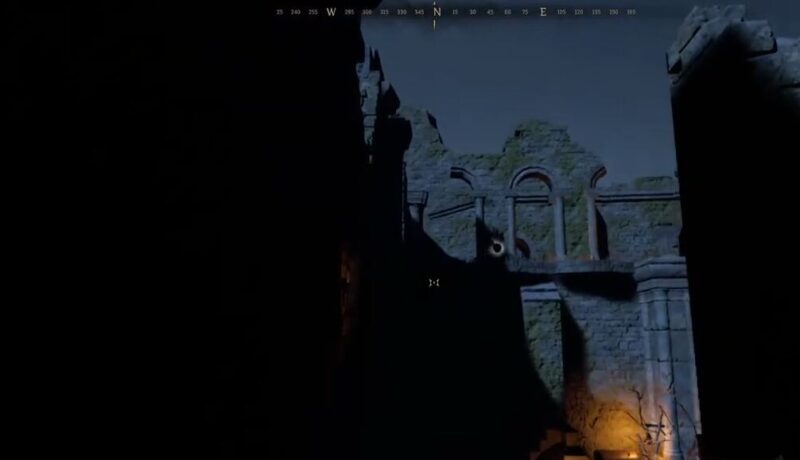
Embarking on a comprehensive exploration of the various classes in “Dark and Darker,” I delved into each character, unlocking extra stashes, completing quests, and reaching level 20 with an arsenal of blue and purple kits. My journey included extensive PvP encounters, where I “W keyed” my way through both normal and high roller lobbies, predominantly in the Ruins. Amidst this adventure, some classes stood out, showcasing unique strengths and quirks. However, one class, in particular, stood in stark contrast—the seemingly neglected Bard.

Wizard – The Surprising Overpower

Defying the “nerf wizard” meme, the Wizard emerged as a potent force. Unleashing devastating attacks even while stark naked, I witnessed the unparalleled ability to eliminate fully kitted opponents. The Wizard-Ranger pairing proved especially lethal, reinforcing the Wizard’s status as a force to be reckoned with.

Barbarian – The Skelly Archer Conquest

Mastering the art of facing skelly archers without incurring damage proved to be the Barbarian’s steep learning curve. A fierce opponent, the Barbarian induced fear in all but the most resolute Fighters or Wizards. The scent of fear wafted through the air, with other classes often opting for distance, dropping bags in hopes of a truce. The Wizard-Barbarian alliance stood out as a formidable duo. That’s why I like to arm him with the best gear I can with my friends and then boost him with more Dark and Darker Gold so it’s easier to win in the end.

Warlock – Dominance in Normal Lobbies

Surprisingly underrepresented, the Warlock asserted dominance in normal lobbies with a well-crafted build. Incorporating Soul Collector, Dark Reflection, a 10% dark magic damage boost, Phantom, and Blow of Corruption, the Warlock reigned supreme. However, as the stakes escalated in high roller lobbies, a shift towards a magic healing build became inevitable.

Ranger – The Kiting Maestro

Thriving in Ruins, the Ranger excelled at kiting, dealing damage from a safe distance. Despite struggling to secure kills, the Ranger’s survival rate remained commendable, swiftly accumulating a full inventory. With no fear of mobs, the Ranger stood out as a versatile and mobile combatant. The Longbow Fighter or another Ranger made for ideal companions.

Rogue – Challenges and Versatility

Navigating the challenges posed by the double jump movement penalty, the Rogue proved to be a popular but intricate class. Struggling in PvP unless catching squishy classes off guard, the Rogue excelled against other Rogues, Wizards, Rangers, and the occasional Bard. However, grappling with a multitude of perks led to a somewhat scattered and challenging build process. Pairing with another Rogue or Ranger proved most effective.

Cleric – The Unchanged Healer

Remaining largely unchanged, the Cleric continued its role as a steadfast healer. Leveling up primarily in crypts, the Cleric’s purpose revolved around keeping allies alive. Balancing resurrect, sanctuary, protection, and lesser heal demanded a substantial knowledge base. The Wizard-Cleric alliance, sharing campfires, facilitated effective teamwork.

Fighter – Consistency Amidst Unchanged Dynamics

Similar to the Cleric, the Fighter showcased consistency in its dynamics. Largely unaffected by changes, the Fighter’s role remained unaltered, and the Slayer Fighter’s nerf did little to diminish its effectiveness. Paired with a Warlock, the Fighter could effectively counter the threat posed by enemy Wizards.

Bard – The Lament of Neglect

In a surprising twist, the Bard emerged as the class trapped in a lamentable state. Formerly used for magic finding purposes, the Bard’s sad condition rendered even the routine trade of cool gear a tedious affair. The only class to evoke laughter, the Bard’s current state begged for attention and improvement.

In conclusion, this journey through each class illuminated the diverse strengths and peculiarities within “Dark and Darker.” While some classes shone brightly, Bard’s plight remains a curious anomaly, leaving players yearning for a renaissance in its gameplay dynamics. The lessons learned and experiences garnered have created a tapestry of insights, inviting further exploration and understanding within this intricate gaming realm.

Exploring the Interpretation of Gear Power: Accurate and Misconstrued Perceptions

This article seeks to address the influx of posts regarding the perceived impact of highly equipped players on match outcomes. These posts reflect both an accurate and a skewed understanding of how gear confers a distinct numerical advantage. While various related topics, such as Ironmace’s plans to tackle issues like the movespeed trade-off and the Rogue dilemma, exist, this article will employ the Rogue as a lens to scrutinize the generalized thesis that often stems from such posts:

“I’m consistently losing fights because opponents possess superior gear, essentially overpowering me even though I have outplayed them.“

This critique is directed towards the generalized thesis, as it appears that many individuals may not be entirely transparent about the reasons behind their losses. Drawing from personal observations across different non-HR maps, it becomes evident that the claims put forth are frequently unsupported. Although anecdotal, the substantial support and upvotes for this thesis statement suggest an alleged pervasive problem of well-equipped players dominating matches. However, a paradox arises, as in a considerable number of goblin caves games, 3-5 players fall to PvE within the first 3-5 minutes.

In essence, these conflicting realities cannot coexist. Even with my somewhat conceited perspective as a potential “lobby terrorizer,” I, too, experience stress and panic in high-intensity situations. This underscores that even those who might seem formidable can make errors and lose matches. The core contention is that an epidemic of players being relentlessly outmatched by perfectly equipped opponents is improbable. Witnessing players with such top-tier gear remains an exception.

The likely issue lies in the fact that players voicing these grievances are either new to the game or have limited exposure to prior playtests. Despite pointing out the likelihood of falsehoods in their claims, it’s important to acknowledge both correct and incorrect interpretations of gear power. As a demonstration, let’s explore how obtaining just four gray items as a Rogue can yield substantial benefits, amplifying damage by approximately 30% and health by roughly 20% relative to initial subpar gear.

The Significance of Four Gray Items:

Ever wondered how a skilled Rogue, clad in nothing but green gloves, boots, a shadow mask, and a green dagger, can wreak havoc? The answer lies in maximizing limited resources, as even with mediocre gear but potent stats, the Rogue can excel. This potential is open to everyone, and at a notably lower gold cost.

Comparing a junk rondel to a gray rondel offers insight. According to the Dark and Darker wiki, the lowest junk rondel roll is 14, while the gray rondel’s lowest is 17. This simple upgrade costs just 7 gold but boosts damage by around 21%.

Further analysis reveals that transitioning from Junk to Green boosts damage by 50%, while the increase from Green to Legendary is only 38%. This diminishing return trend is more prominent with higher base damage weapons. Thus, while higher rarities have larger damage ranges, each additional point of base damage remains progressively less impactful.

Consequently, early upgrades from gray to green or white can significantly amplify base weapon damage.

Additionally, class base stats are uniform in Dark and Darker, with variations arising from different class base stats. By equipping gray +1 strength gloves and pants and a gray Shadow Mask / Hood with +1 strength or +1 to all, a Rogue’s health rises by around 10 and physical damage by about 10%. Rogue’s base strength of 8 yields ~3 max health and ~3% physical damage bonus for each strength point until the neutral point of 15, where negative modifiers are nullified.

While this analysis employs simplifications and may lack perfection, it underscores the graspable nature of the system.

Conclusion:

Numerous players may be new to the game or not yet adept at exploiting class base stats. The transformative impact of just four gray items on a basic Rogue setup illustrates how players can drastically bolster their effectiveness. These acquisitions can be stockpiled for future use when crafting an improved build. Acknowledging that losses can stem from opponents who excel at capitalizing on minimal resources, newer or less experienced players accurately perceive opponents as “stat-checking” them. However, they may overlook the power of prioritizing stats and upgrading gear quality, which can substantially bridge the stat gap against better-equipped adversaries. At the same time, you need a lot of Dark and Darker Gold to boost your character, and every victory is a boost.